
A redesigned package reduces shipping damage only if damage actually falls after it ships. To reduce shipping damage with foam, compare damage claims per shipment before and after the redesign, using comparable products, routes, and shipment volumes. Track packing time as well to see whether the new fit protects the product without slowing packing.
Adding more cushioning may seem like the obvious fix, but a better fit matters more than simply using more material. Foam should support vulnerable areas, limit movement, and cushion the product without putting excessive pressure on it.
This guide explains how to match foam to a product’s shape and likely failure points, when another packaging material may be a better fit, and how to assess results through trial shipments and claim tracking. Material choice depends on factors such as product weight, fragility, surface sensitivity, shipping conditions, and order quantity.
Key Takeaways
- Match the insert to the product’s shape and vulnerable areas so it stays stable without being squeezed.
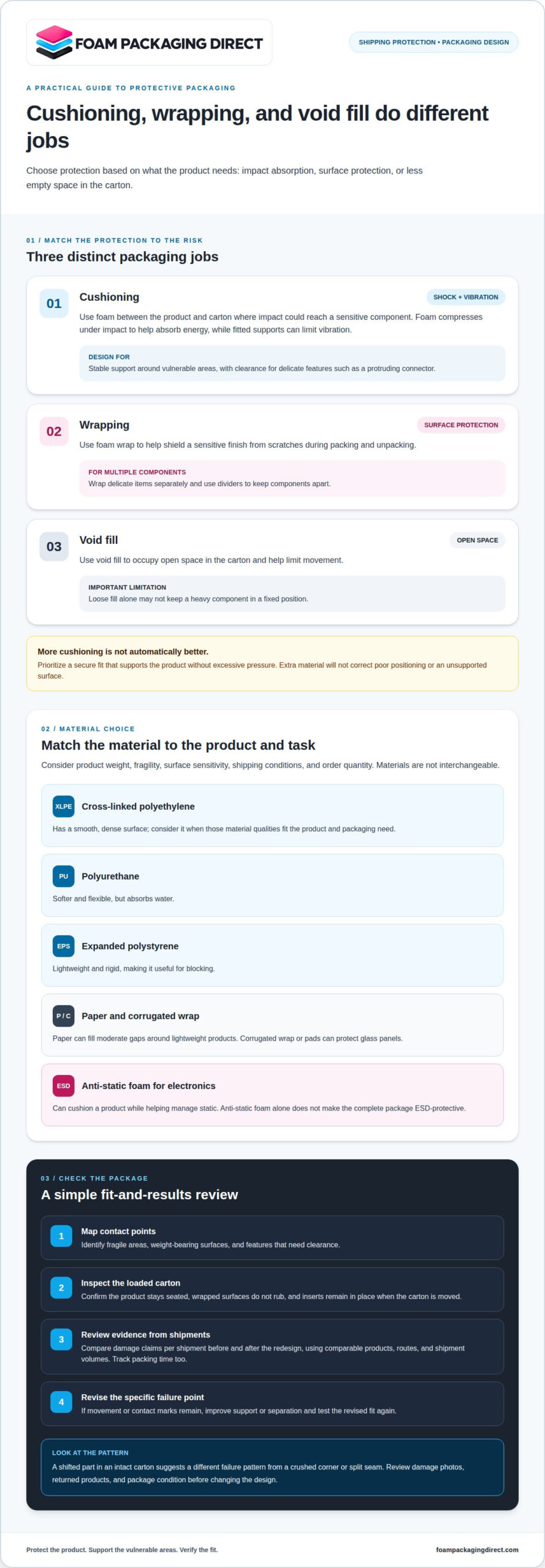
- Use cushioning to absorb impact, wrapping to protect sensitive surfaces, and void fill to limit movement where appropriate.
- Choose materials based on product weight, fragility, finish, shipping conditions, and how the package will be handled.
- Compare damage claims per shipment before and after a redesign, and use trial shipments to spot fit or packing issues.
Matching packaging to product geometry and failure patterns
Match the package to the product’s shape, vulnerable areas, and likely movement in transit. In the United States, foam recycling options depend on the material and local collection. Identify the foam and follow local disposal guidance.
-
Match Packaging to Product Geometry
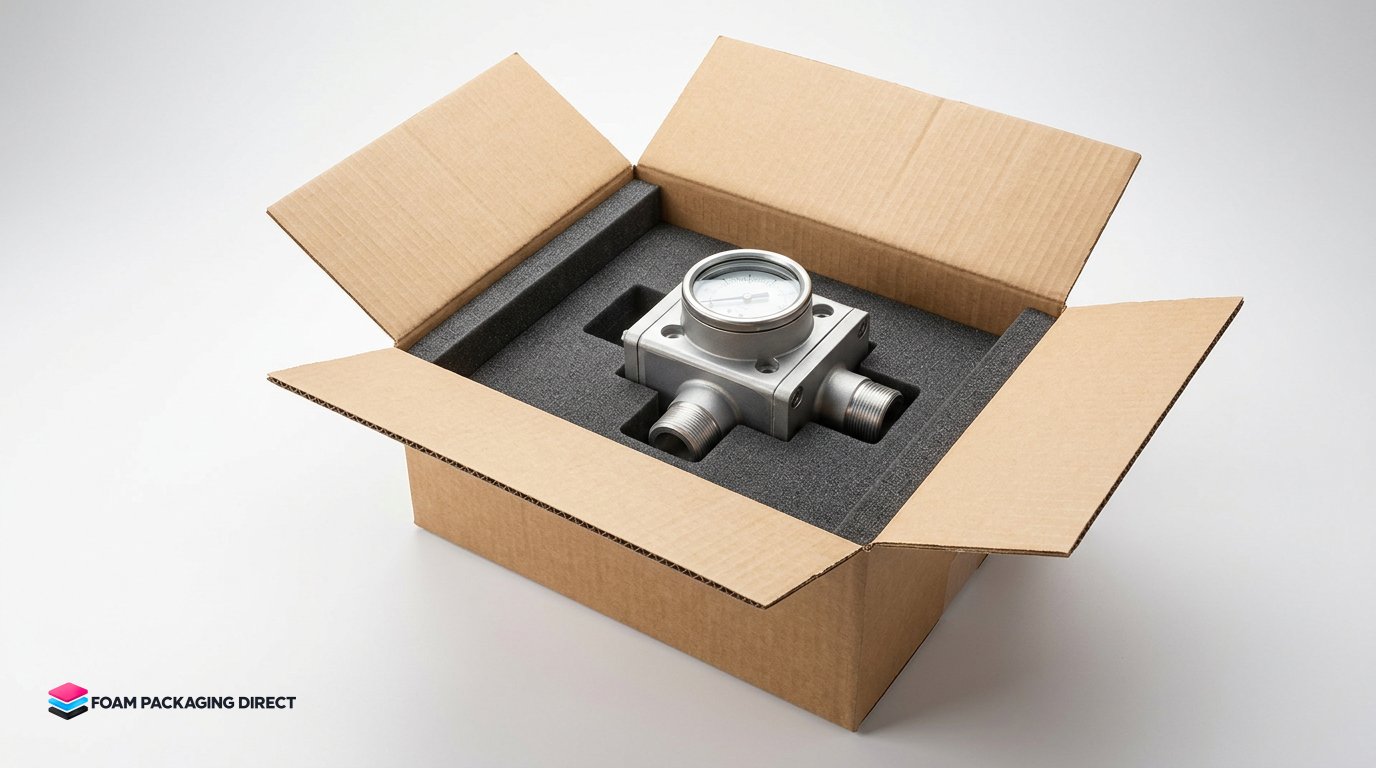
Map the product’s contact points, fragile edges, and weight-bearing surfaces before choosing supports. A long component may need end support, while a part with projecting fittings needs clearance around them. Check that each contact area is supported without excessive pressure. For electronics, note sensitive components and surfaces that could shift or rub during vibration. A well-fitted support can help reduce shipping damage with foam by limiting movement while keeping delicate features clear.
-
Identify Common Packaging Mistakes
Inspect the current package for a loose fit, uncovered corners, and weak bottom support. A box much larger than its contents can let a product slide or rotate, while a tight cavity can press against delicate features. Shake a sealed sample carton and check for movement. Excessive cushioning will not fix poor positioning or an unsupported surface. These checks help identify specific design changes that may reduce shipping damage with foam.
-
Separate Packaging Failures from Handling Issues
Compare damage photos, returned products, and package condition across shipments before changing the design. A crushed corner or split seam points to a different failure pattern than an intact carton with a shifted part. Look for repeatable marks, such as scratches where components touched, and record the carrier, route, and damage location. This evidence helps distinguish inadequate support from a handling event.
-
Prepare a Quote and Test a Prototype
For a redesign request, gather product dimensions and weight, shipment quantity, shipping ZIP code, current box dimensions, and any drawings or photos. Note where damage occurs and any surface or electronics requirements. Test a prototype with a representative product, then conduct trial shipments. Compare damage claims per shipment and packing time before and after the change. If movement or contact marks remain, revise the fit and test again.
Differences between cushioning, wrapping, and void fill
Design an insert by locating fragile parts and supporting them without pressure or movement. For a fragile item, shape internal cushioning around vulnerable areas, and use wrapping or void fill only for the separate jobs each is meant to do.
-
Use Foam for Shock and Vibration
Place cushioning between the product and carton wherever impact forces could reach a sensitive component. Foam compresses under impact, helping absorb energy before it reaches the item; fitted supports also limit vibration in transit. For example, a product with a protruding connector may need a protected recess so the connector does not bear the package’s load. Avoid adding foam indiscriminately, since excess material can interfere with a secure fit.
-
Cushion Sensitive Cargo with Foam
Use a shaped insert when a fragile product needs stable, repeatable positioning. A camera body, for example, can sit in a cavity that supports its body while leaving controls and lenses clear. For electronics, anti-static foam can cushion the product while helping manage static, but it is not, by itself, a complete ESD protection system. Assess the full package and handling process against the product’s needs.
-
Separate Cushioning, Wrapping, and Void Fill
Choose each material for its purpose. Foam cushioning absorbs impact and supports the product; foam wrap helps shield a finish from scratches during packing and unpacking. Void fill occupies open space in the carton, but loose fill alone may not keep a heavy component in a fixed position. For a mixed shipment, wrap each delicate item separately and use dividers to keep components apart.
-
Check the Fit Before Shipping
Load a sample carton and inspect contact points before sending trial shipments. Confirm the item stays seated, wrapped surfaces do not rub against adjacent parts, and inserts remain in place when the carton is moved. After delivery, review damage locations and packing condition. If marks appear where a component touches its neighbor, revise the separation or support instead of simply adding more cushioning.
Choosing between foam, paper, corrugated wrap, and other materials
Choose protection based on the product’s fragility, size, weight, surface sensitivity, and shipping conditions. The right combination should support the item without adding material that does not address a specific risk.
-
Assess Item Fragility, Size, and Weight
Start with the item’s dimensions, weight, and most delicate features. A heavy component can compress foam that is too soft, while firm foam may not absorb shock effectively for a lightweight, fragile item. Identify the product’s safe support points, then position cushioning around them. Leave clearance for thin edges, connectors, and polished faces that could be marked by pressure or contact.
-
Compare Foam, Paper, and Corrugated Wrap
Use foam where the product needs shaped support, impact cushioning, or separation from other components. Cross-linked polyethylene (XLPE) has a smooth, dense surface; polyurethane is softer and flexible but absorbs water. Expanded polystyrene (EPS) is lightweight and rigid, making it useful for blocking. Paper can fill moderate gaps around lightweight products, while corrugated wrap or pads can protect glass panels. For electronics, anti-static foam helps address static concerns, but it does not make the complete package ESD-protective. Match the carton’s structure to the shipment too, especially if it deforms or arrives crushed.
-
Calculate the Foam Cushioning Needed
Measure the product and carton interior, then plan support at each contact area. Account for foam settling in transit and leave enough space to protect the item without creating a loose fit or excessive pressure. A long part may need end support and cushioning beneath its load-bearing areas. Pack a sample and inspect it after movement or a trial shipment. To reduce shipping damage with foam, use the results to adjust support locations and material rather than filling every open space. The right amount supports the product and keeps it stable in transit.
How do I calculate the amount of foam cushioning a package needs?
Plan the cushioning layout using the product’s measurements and the space available inside its carton. Consider each support point separately, then assess the assembled package rather than relying on a single thickness measurement.
- Measure the product’s length, width, and height, including handles, connectors, and other projections. Record its weight and identify surfaces that must not bear pressure. These details help establish cavity dimensions and show where cushioning can safely contact the item.
- Measure the carton’s usable interior dimensions. Compare the product dimensions with the corresponding inside measurements to determine the space available for supports. Check each side independently, since the product may need different clearances at its ends, base, and top.
- Sketch the support layout before cutting or selecting foam. Mark weight-bearing areas and points that need clearance. For an item with a projecting connector, for example, plan a recess around it rather than letting the connector rest against the carton or foam.
- Consider how the selected foam behaves under the product’s weight. Foam may settle in transit, so inspect whether the design still supports the item after compression. Avoid a cavity so tight that packing creates pressure or so loose that the item shifts within its supports.
- Pack a sample and examine the fit from several sides. Check that supports stay in position and the product remains seated when the closed carton is moved. Use trial shipments to observe the complete package in transit, then adjust the layout if the product shifts or support areas compress. For a quote, provide dimensions, weight, quantity, shipping ZIP code, box size, and available drawings or photos when you request a packaging quote.
Foam Packaging Direct: Custom Foam Inserts
Foam Packaging Direct makes custom foam inserts and foam end caps to hold products in place and support vulnerable areas during shipping. These can suit parts that shift inside standard packaging or need a shaped fit. Foam sheets and pads can add protection between layers, while foam rolls and wrap can help shield sensitive finishes.
For a packaging redesign, describe what the current package needs to protect and where damage occurs. Include product dimensions and weight, order quantity, shipping ZIP code, existing box dimensions, and any available drawings or photos. These details help match the packaging to the product and shipment.
Request a quote from Foam Packaging Direct with your product and packaging details.
Make the Next Packaging Change Measurable
A packaging redesign works best when the people packing and receiving the product can use it consistently. Record the current process, note where products shift or need extra handling, and use those observations to guide revisions. Treat packaging as part of the shipping workflow, not as a one-time material choice.
Before requesting a quote, gather product dimensions and weight, order quantity, shipping ZIP code, existing box dimensions, and any available drawings or photos. Include specific protection concerns, such as vulnerable edges, surface sensitivity, or repeated movement in transit. These details help shape a packaging option around the actual application.
When you’re ready to discuss a packaging design, request a quote from Foam Packaging Direct. A clear set of product details gives the conversation a practical starting point for planning the next step.
Frequently Asked Questions
How do I measure whether a packaging redesign reduces shipping damage?
Track results by product model and damage type so an improvement for one item does not hide problems with another. Keep reporting categories consistent, such as cosmetic damage, broken features, and missing components. Note whether each return involved the same package configuration. This helps show whether a redesign addresses a recurring failure or simply changes the pattern of reported damage.
How should the outer package match the shipment?
Choose a carton that fits the shipping method and how the shipment will be stored or consolidated. Consider whether cartons will be stacked together or placed on a pallet, and whether the package needs a clear orientation during handling. Match the carton’s footprint and shape to those conditions while leaving room for the protective components the product needs.
How does foam packaging reduce shipping damage?
Foam can separate product features that might otherwise touch inside a package. For example, a multi-part assembly can have distinct recesses for each piece, keeping a loose fastener away from a finished surface. This separation can prevent contact marks and simplify unpacking by giving each component a designated place.
Which types of foam are used for protective shipping packaging?
Choose material according to the application. Polyethylene (PE) Foam suits heavy or sharp-edged parts, while Cross-linked Polyethylene (XLPE) Foam can protect clean, premium finishes. Polyurethane (PU) Foam can suit delicate, lightweight items. Expanded Polypropylene (EPP) Foam is used for returnable packaging, and Expanded Polystyrene (EPS) Foam provides rigid protection. Anti-static and conductive foams address different electronics packaging needs.
How do I choose the right foam density and thickness for a product?
Compare candidate materials at the product’s actual contact points rather than selecting thickness based only on its outline. A narrow support may compress differently from a broad cradle under the same product. Check whether the foam holds the intended position after packing and unpacking. Include the container’s internal space in the comparison, since the insert must fit both the product and carton.
How can I test a foam package before shipping products?
Run the prototype through the usual packing sequence, including loading, closing, labeling, and unpacking. Have the regular packing staff use it, then note whether the product fits consistently and whether any components catch during removal. Change one design feature at a time, such as a pocket shape or support location, so the next evaluation shows which adjustment affected fit or handling.