
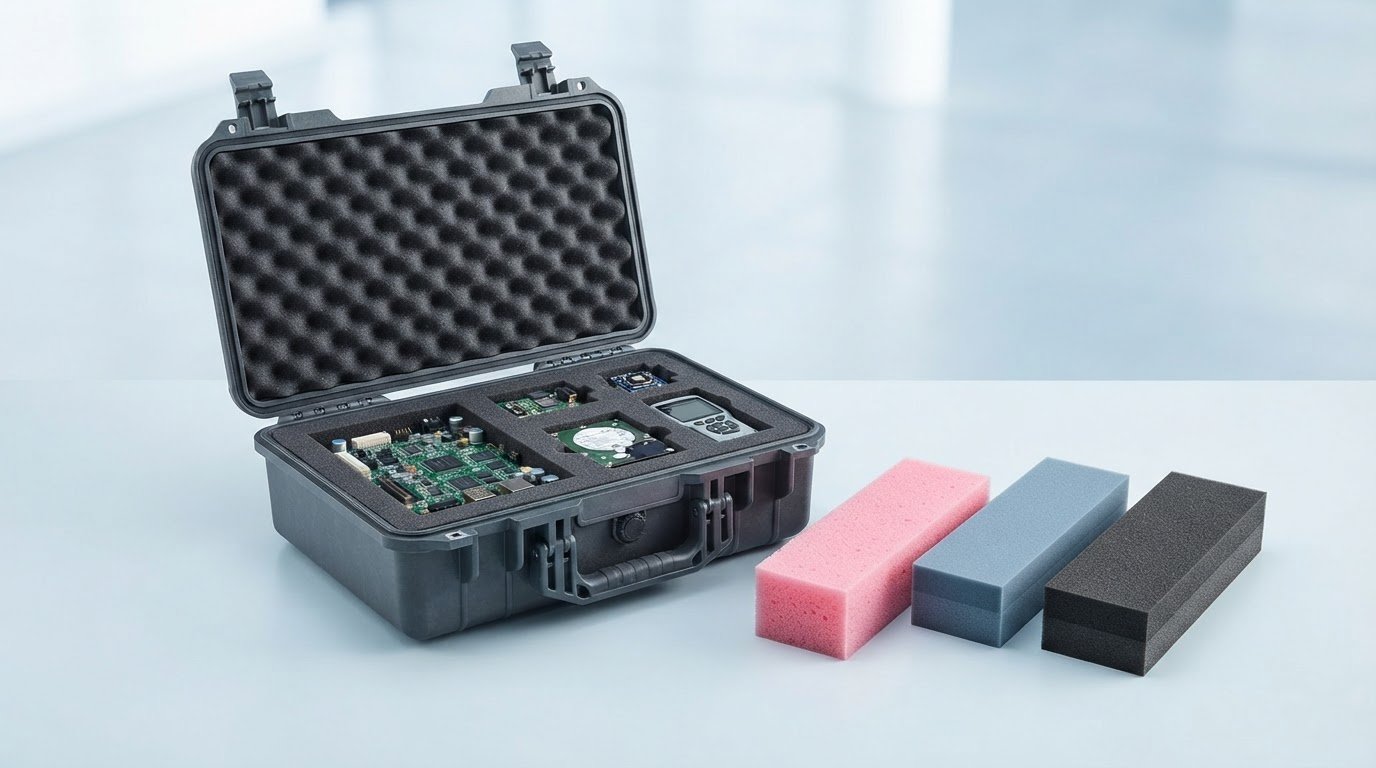
Foam packaging for sensitive electronics should be selected first by static sensitivity, then by device weight and the cushioning it needs. Highly sensitive components need ESD-safe foam, while heavier equipment generally needs firmer support than lightweight parts. The right fit also limits movement, which helps reduce rubbing and impact during shipping.
Cushioning is only part of the decision: static control and weight also affect which material is suitable. This guide explains the differences between anti-static, static-dissipative, and conductive foam, and how polyethylene, XLPE, and polyurethane suit different devices. It also shows how product fit and shipping conditions shape the choice, so you can compare options against practical requirements rather than guesswork.
Key Takeaways
- Match the insert’s shape to the device and case so components stay organized and have less room to shift.
- Distinguish anti-static cushioning from static-dissipative and conductive options when assessing ESD risk.
- Use device weight, fragility, surface sensitivity, and shipping conditions to narrow down suitable foam materials.
- Bring product dimensions, weight, and packaging requirements together to specify a practical custom insert.
How do I choose foam packaging for an electronic device?
Choose foam packaging for sensitive electronics by considering ESD risk, device weight and dimensions, surface sensitivity, and shipping conditions. The insert should support the device and fit its case without crowding controls, connectors, or accessories.
Custom-Fit Insert Design
A custom-fit insert follows the device and case dimensions to create an organized layout. For example, polyethylene can be cut around a control unit, with separate spaces for cables and accessories. This keeps each item in its assigned position and clarifies the packing sequence. Once the dimensions and layout are approved, manufacturing turns them into a physical insert. For components that need precisely routed cavities and defined support points, see these custom foam inserts for aerospace parts.
Custom Inserts Versus Stock Cushioning
Stock cushioning uses general-purpose sheets or pads, while a custom insert has cavities sized for specific items. A general pad may suit a simple product, but it won’t organize a meter, probes, and leads as clearly. Dedicated spaces also make it easier to check that all components are packed before closing the case. Compare the layout with the actual case, including clearance beneath the lid.
Foam Material Comparisons
Polyethylene is firm, closed-cell, and moisture-resistant, making it useful for supporting heavier equipment. Polyurethane is softer and open-cell, so it can cushion lightweight components. Polystyrene is rigid and lightweight, but provides less shock absorption than cushioning-focused options. U.S. packaging and shipping requirements depend on the device and shipment, and foam alone doesn’t establish compliance.
Recyclable and Eco-Friendly Foam Options
Recyclable foam may suit electronics if its fit, cushioning, and ESD properties also meet the application’s needs. Recyclability alone doesn’t ensure protective performance. For example, an insert for a circuit board still needs to hold it securely and protect its contact points. Consider end-of-use handling alongside the device’s protection requirements.
Electrostatic discharge protection
Electronic packaging must address both electrostatic discharge (ESD) and physical hazards during transit. The right combination depends on component sensitivity, contact points, and the route’s exposure to shock and vibration.
Antistatic and Conductive Foam
Anti-static foam limits static buildup, while conductive foam helps dissipate electrical charge. This distinction matters because ESD can damage circuit boards and other sensitive electronic components. Anti-static cushioning helps reduce charge accumulation during handling, but it isn’t the same as a conductive layer. For highly sensitive components, conductive foam provides a more direct path for charge to move away. Foam alone doesn’t make a complete package ESD-compliant.
Risks of Non-ESD-Safe Foam
Foam without suitable ESD properties can build up static through friction and expose components to discharge. A circuit board may be damaged even if the foam cushions it against impact. The risk arises during packing, unpacking, and movement inside a box. Choosing foam by appearance or softness alone can overlook this electrical hazard. Match the material’s ESD function to the component’s sensitivity.
A conductive bag adds a protective layer around components before they go into a foam insert. For example, place a circuit board in a bag, then set it in a fitted cavity that limits movement. This combination addresses ESD and physical contact as separate concerns. The bag and foam each have a specific role: cushioning doesn’t replace the bag’s electrical protection.
For a touchscreen or glass panel, use shaped polyethylene foam to support the edges and prevent the face from rubbing against other parts. Edge profiles can hold the panel in position while leaving the display surface clear. Add cushioning around corners, where impacts can transfer through a case. Fitted foam also reduces vibration and shock during transit. Moisture-resistant polyethylene can help limit exposure, while polyurethane offers softer cushioning for lighter components. Choose the packaging to suit the device’s surfaces and shipping conditions.
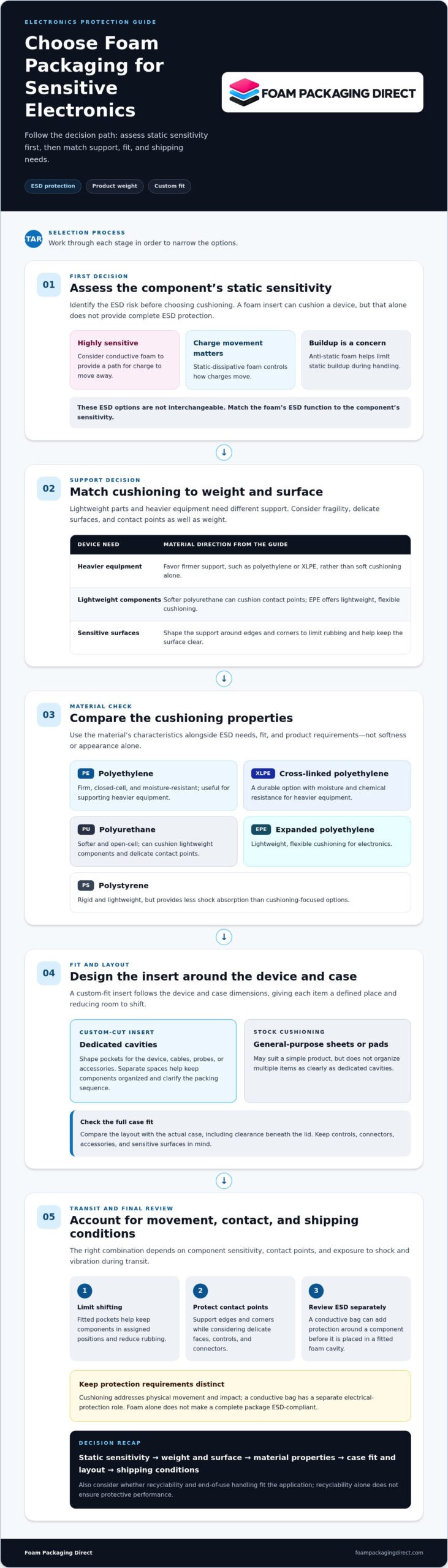
Choosing foam based on static sensitivity and product weight
Choose the ESD protection level first, then match the cushioning to the device’s weight. A lightweight sensor and a heavy control unit need different support, even if both contain electronic components. Also consider internal movement, surface contact, and whether the package will be reused.
Anti-static foam helps limit static buildup, static-dissipative foam controls how charges move, and conductive foam provides a path for charges to travel. These options aren’t interchangeable. For a sensitive circuit board, identify its ESD risk before choosing cushioning. Conductive foam is intended for highly sensitive components, while anti-static foam can suit applications focused on reducing charge buildup during handling.
Weight determines how the foam must support the product. Lightweight parts need cushioning that holds them without applying excess pressure. Heavier equipment needs firmer support to limit movement and absorb impact. A small sensor and a bulky power supply, for example, shouldn’t automatically use the same foam density or insert layout.
- High static sensitivity: Consider conductive foam for highly sensitive components.
- Static buildup concern: Anti-static or static-dissipative foam can address charge-related needs.
- Greater product weight: Favor firmer polyethylene or XLPE support over soft cushioning alone.
For a lightweight device with a delicate surface, softer polyurethane can cushion contact points. EPE also provides lightweight, flexible cushioning for electronics. For heavier equipment, XLPE offers a durable option with moisture and chemical resistance. Product dimensions and contact areas help determine where each material belongs.
Mixed shipments require separate protection decisions for each component. A conductive insert can hold sensitive parts, while firmer foam supports a heavier assembly. Custom-cut pockets keep items from shifting into one another. Match the insert to each item’s static risk and weight, then consider shipping conditions and reuse needs.
Foam selection based on device sensitivity
Device sensitivity involves more than electrical risk. A delicate optical sensor, glass display, and sealed control unit each respond differently to contact, shock, moisture, and pressure. Start by identifying vulnerable surfaces, protruding connectors, and parts that must stay still during shipment. Then consider route conditions, package reuse, and storage before settling on a foam structure.
For fragile surfaces, the insert should support the device without pressing on its active face. For example, a display panel can sit in a shaped perimeter support that keeps other contents from rubbing against the glass. Sensor modules may need individual compartments to prevent them from knocking together. This layout also makes packing more consistent when a shipment contains several related components.
Shipping conditions influence material and insert design. Rough handling or long-distance transit calls for denser cushioning than a short, controlled move. Moisture exposure matters too: XLPE resists moisture and chemicals, while the packaging should prevent sensitive surfaces from contacting contaminants. For sealed electronic units, pressure variations during air shipment can affect the unit, so avoid designs that add unnecessary pressure to its housing.
- Surface sensitivity: Keep glass, screens, and finished panels clear of rubbing contact.
- Movement risk: Separate small sensors and connectors in fitted compartments.
- Shipment conditions: Consider rough transit, moisture exposure, stacking, and reuse.
Before full production or shipment, evaluate a sample package with the actual device. Check that the insert holds each part, that pressure marks don’t appear, and that surfaces remain protected after packing and unpacking. If the device shifts or the foam deforms, adjust the cavity shape or support areas. A practical design balances protection with easy removal, especially for delicate components handled repeatedly.
Foam Packaging Direct: Custom Foam Inserts
Foam Packaging Direct designs and manufactures custom foam inserts for electronics that need a fitted layout or organized component spaces. Include product dimensions, weight, order quantity, shipping ZIP code, and any available drawings or photos when requesting a quote. Existing box dimensions and specific ESD or surface-protection requirements can help guide the insert design.
Foam end caps, sheets, and pads can support other packaging layouts. Include your product and packaging details when requesting a quote.
Make the Next Shipment Easier to Pack
Turn protection requirements into a packaging specification your team can use consistently. Record the device version, orientation, component locations, and any areas that must remain clear. When a product changes, update the drawing and packing instructions together. This helps prevent an outdated layout from being used with a revised device.
For foam packaging for sensitive electronics, a clear specification gives the packaging design a practical starting point. Include details that affect how the device sits in its package, such as revised dimensions or newly exposed connectors. This keeps the design discussion focused on the product’s actual needs.
If you’re ready to apply those requirements to a packaging project, contact Foam Packaging Direct to request a quote. A clear specification can help move the project toward a packaging layout that works for your operation.
Frequently Asked Questions
How should buyers evaluate foam type, fit, and layout?
Start with the device’s most vulnerable feature, then assess contact points and handling. For a handheld instrument, check whether controls, ports, or lenses could press against the package. Map each accessory separately so cables don’t scrape the display. Compare the proposed layout with the actual case interior, including lid clearance, before approving the design.
What does a custom foam insert do inside an electronics case?
A custom insert creates dedicated spaces for a device and its accessories, helping keep them organized during storage or transport. For example, a field-testing kit might have separate cavities for a meter, probes, and leads. This layout makes contents easier to identify during packing and unpacking, while keeping loose components from collecting at the bottom of the case.
What information helps an electronics packaging quote?
Provide the device dimensions, weight, order quantity, shipping ZIP code, and any available drawings or photos. Include the existing box or case dimensions if you plan to reuse them. Note exposed screens, fragile connectors, ESD concerns, and other special protection requirements. These details help define the insert layout and material needs. You can also include accessories packed with the device in your quote request.
What is Anti-Static Foam?
Anti-static foam is designed to limit static buildup that can contribute to electrostatic discharge. It can cushion and separate electronic components, but it isn’t interchangeable with conductive foam. A component’s ESD risk, for example, may call for a specific protective material or a conductive bag alongside cushioning. Choose according to the component’s sensitivity and the protection the package must provide.
What is packing foam made of?
Packing foam is made from polymers formed into structures with small gas-filled cells. The polymer and cell structure affect how the foam cushions, flexes, and supports a product. Polyethylene, polyurethane, EPS, and XLPE are distinct foam materials, not interchangeable labels. For instance, a packaging design may use firm polyethylene support in one area and softer cushioning elsewhere.
What foam packaging materials are best for sensitive electronics?
The suitable material depends on ESD sensitivity, device weight, surface finish, and shipping conditions. A lightweight component may need softer cushioning, while heavier equipment calls for firmer support. For a sensor with exposed circuitry, consider ESD protection as well as cavity fit. Match material selection to the specific device and package design rather than relying on one foam type for every shipment.