
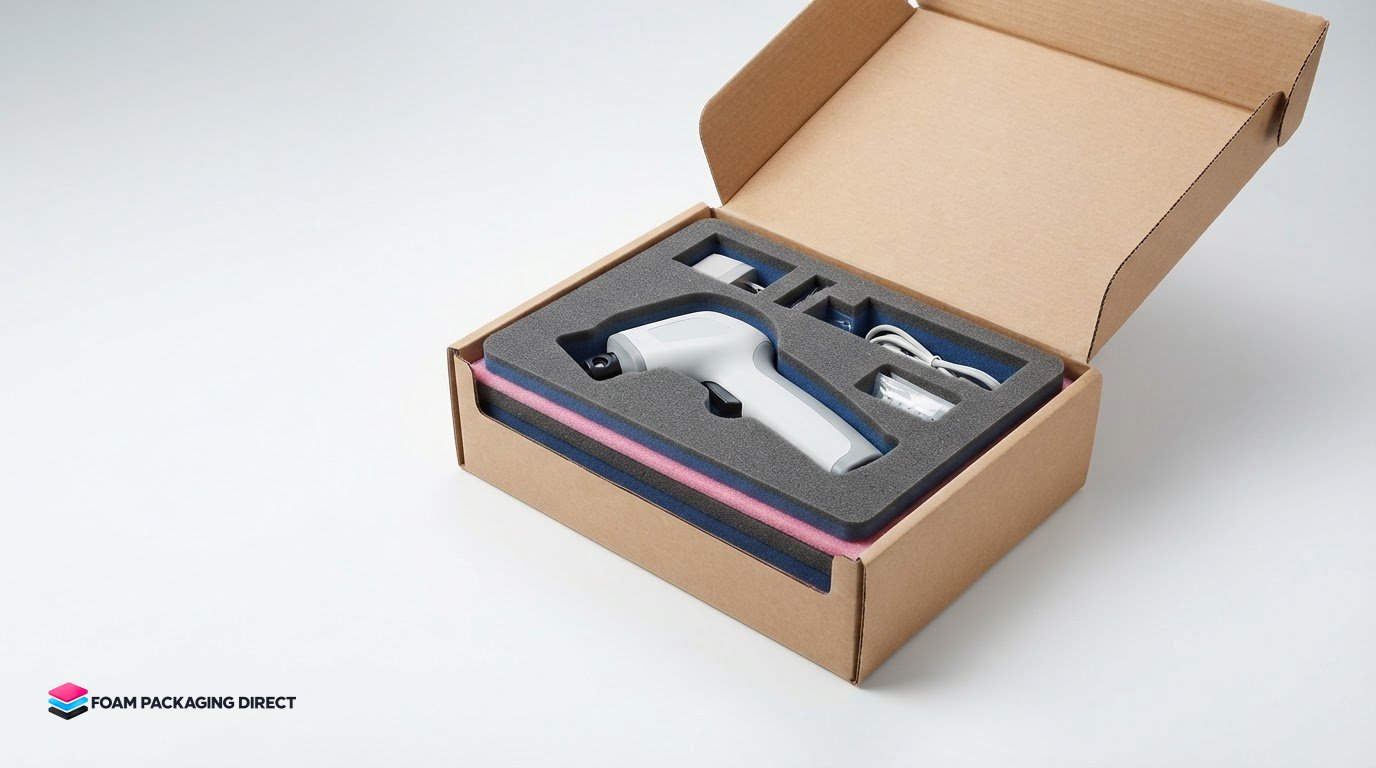
Protective packaging for medical devices starts with a fit designed around the device, not a one-size-fits-all cushion. Foam inserts for medical devices are custom-shaped to limit movement and support delicate surfaces during handling and shipment. The right design depends on the device’s dimensions, weight, fragility, and packaging environment.
Foam choice affects both protection and handling. Material, fabrication method, and cleanroom requirements all play a part, and foam alone should not be assumed to provide a sterile barrier. Clear specifications help match the insert to the device and its packaging process.
This article explains how cutting and lamination shape an insert, what to consider when choosing materials, and how to plan for clean handling. It also covers the product details and packaging requirements that help guide a practical design.
Key Takeaways
- Match cutting and lamination methods to the device’s shape, contact points, and packaging layout.
- Compare foam materials based on the application, and assess safety information for the intended use.
- Consider particulate control and handling practices when packaging needs to fit a cleanroom process.
- Prepare dimensions, weight, quantity, and drawings or photos to help shape a practical custom insert.
Foam fabrication methods, including CNC cutting and lamination
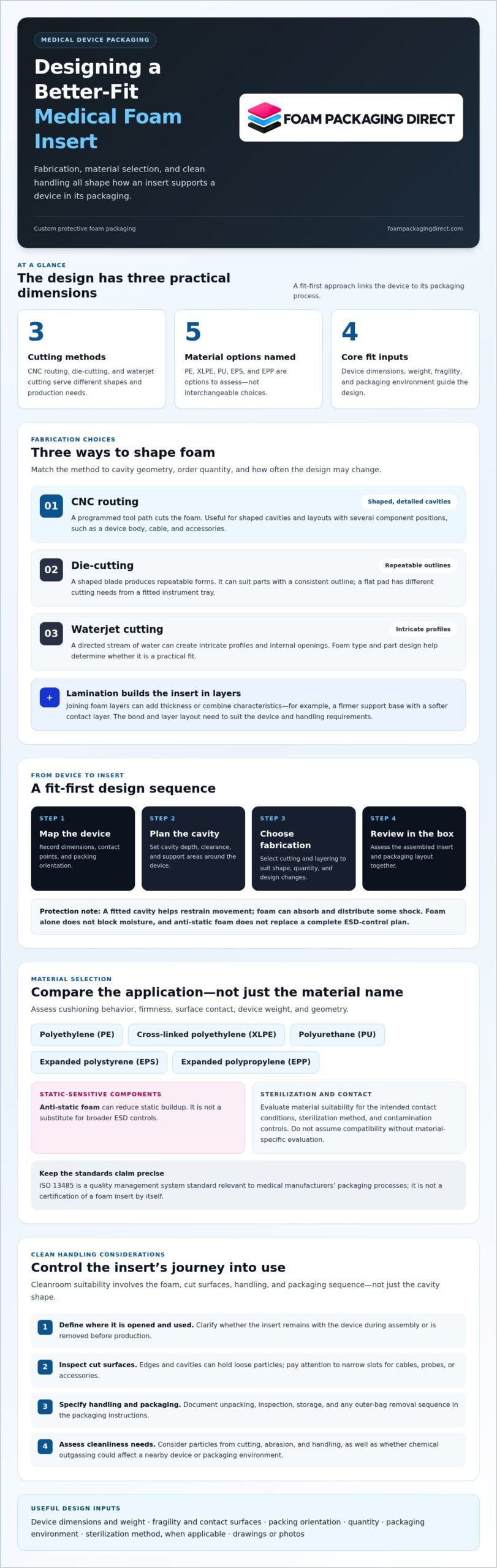
Foam inserts protect devices by cushioning impacts, limiting movement, and separating components during transit. Foam absorbs and distributes some shock, while a fitted cavity helps restrain movement caused by vibration. Foam alone does not block moisture, so moisture-sensitive equipment needs suitable sealed packaging. Anti-static foam can reduce static buildup, but it does not replace a complete ESD-control plan.
Fabrication begins with the device’s dimensions, contact points, and packing orientation. A designer maps its outline and selects cavity depth, clearance, and support areas. CNC routing for custom foam inserts follows a programmed tool path through the foam, making it useful for shaped cavities and layouts with several component positions. For example, separate cutouts can hold a device body, cable, and accessories.
Die-cutting uses a shaped blade to produce repeatable foam forms. It can suit repeated parts with a consistent outline, while CNC routing offers more flexibility for changing shapes and detailed cavities. The right method depends on geometry, order quantity, and how often the design may change. A flat pad, for example, has different cutting needs from a fitted instrument tray.
Waterjet cutting uses a directed stream of water to cut foam without a traditional blade. It can create intricate profiles and internal openings, making it an option for layered shapes or complex outlines. Foam type and part design determine whether waterjet cutting or another method is the practical fit.
Lamination joins foam layers to build thickness or combine different foam characteristics. A layered insert might use a firmer base for support and a softer contact layer for a delicate surface. The bond and layer layout need to suit the device’s shape and handling requirements.
Reviewing a drawing or sample helps clarify the process: confirm dimensions, map each cavity, choose a cutting method, then assess the assembled insert in its box. This connects fabrication choices to fit, component organization, and protection during shipping.
Bio-compatibility and material safety
Material suitability depends on the device, the foam’s packaging role, and any processing exposure. Evaluate the foam against the intended contact conditions, sterilization method, and contamination controls.
Sterilization Method Compatibility
Do not assume any foam type is compatible with gamma, ethylene oxide (EtO), or autoclave sterilization without material-specific evaluation. Each process exposes packaging to different conditions, so review how the foam responds to the method and the device’s packaging requirements. Include the actual sterilization process in material selection, then assess whether the foam retains the necessary fit and function after exposure.
Applicable ISO Standards
According to the International Organization for Standardization, ISO 13485 is a quality management system relevant to medical manufacturers’ packaging. It is a management-system standard, not a certification of a foam insert by itself. For a packaging project, consider how material selection, design records, and production controls fit within the medical manufacturer’s quality processes.
Medical Insert Foam Types
Common options include polyethylene (PE), cross-linked polyethylene (XLPE), polyurethane (PU), expanded polystyrene (EPS), and expanded polypropylene (EPP). These materials are not interchangeable. Compare their cushioning behavior, firmness, surface contact, and suitability for the device’s weight and geometry. Anti-static foam can reduce static buildup around sensitive components, but it does not replace broader ESD controls. Choose based on the application, not the material name alone.
Shedding, Outgassing, and Contamination Risks
Cut edges, abrasion, and repeated handling can release particles from foam surfaces. Chemical outgassing may also matter if volatile substances from the material could affect a nearby device or packaging environment. Assess the foam’s condition, manufacturing residues, storage, and handling against the device’s cleanliness needs. For example, a sensitive optical component calls for attention to debris on contact surfaces and inside cavities.
The materials are selected to satisfy FDA packaging requirements. Selected foams are REACH- and RoHS-compliant and are intended not to compromise medical devices’ sterile barriers.
Cleanroom and particulate-shedding considerations
Cleanroom packaging involves more than shaping a cavity. The insert’s material, cut surfaces, handling, and packaging sequence all affect how it enters a controlled area. Define where the foam will be opened and used before choosing the design.
First identify the cleanroom environment and the device’s cleanliness requirements. A device packaged outside the room may need different handling from one unpacked at a workstation inside it. For example, specify whether the insert remains with the device during assembly or is removed before the device enters production.
Cutting can leave loose particles along edges or inside cavities. Review these areas after fabrication, especially narrow slots that hold cables, probes, or small accessories. A practical inspection step is to examine the cut surfaces and remove visible debris before packing the insert with the device.
Handling matters, too. Staff can transfer particles from gloves, work surfaces, or outer packaging onto an insert. Define the sequence for unpacking, inspection, and placement, then follow clean handling practices appropriate to the facility. For example, inspect a tray insert before placing components in its individual cavities.
Packaging protects the foam between fabrication and use. Consider how the insert is covered, stored, and opened at the point of use. If an outer bag is part of the process, specify when it is removed and where the insert is exposed. Keep the packaging sequence clear in work instructions so operators handle each layer consistently.
Document the requirements in the insert drawing and packaging instructions. Include device contact areas, surfaces that must remain free of debris, and the intended unpacking location. These details align the foam design with the facility’s cleanroom controls without treating the insert alone as proof of cleanliness.
Custom medical foam manufacturing
Custom manufacturing turns device details into a fitted layout for shipping and handling. Start with dimensions, weight, fragile areas, surface sensitivity, and existing box dimensions. Then map device contact points, accessory locations, and packing orientation. These details guide foam choice, cavity design, and fabrication so the insert holds the equipment without obstructing packing.
For a heavy device, support depth and base thickness matter. High-density foam of 2.0 pcf or greater can help protect heavy medical devices from bottoming out against the outer container. The design still needs to account for the device’s shape, the box interior, and the shipping conditions. A cavity that leaves insufficient support beneath a base or corner can undermine the intended fit.
Next, translate the layout into a drawing or cutting file. CNC routing can form distinct cavities for a monitor, cable, and accessories, while die-cutting can suit repeatable flat profiles. Lamination joins layers when the design needs different thicknesses or contact surfaces. The fabrication sequence should follow the part geometry, selected foam, order quantity, and packing arrangement.
Review the design against actual handling tasks. A technician should be able to place and remove the device without catching connectors or pressing controls. Separate cavities can keep a probe from contacting a power supply, while a shaped channel can guide a cable. In a reusable tote, consistent component placement can also make packing easier to repeat.
Before production, compare the drawing with the device and box, then assess the assembled package. Check that the insert supports the intended contact areas and leaves room for accessories. For a quote, provide product dimensions, weight, quantity, shipping ZIP code, and any drawings or photos. Existing box dimensions and special protection requirements also help define the design.
Foam Packaging Direct: Custom Foam Inserts
Foam Packaging Direct designs and supplies custom protective foam packaging for medical equipment and its packing requirements. Custom foam inserts are useful when devices or accessories need dedicated cavities, clearer organization, or less movement inside a shipping box. Foam sheets and pads can add cushioning, while foam rolls and wrap can separate or cover components.
For equipment with a defined packing sequence, tote and tray inserts can keep parts organized between handling steps. The right format depends on device dimensions, weight, surface sensitivity, order quantity, and shipping conditions. When requesting a quote, share your product dimensions, weight, quantity, shipping ZIP code, and available drawings or photos. Include existing box dimensions and special protection requirements to help define the packaging need.
Contact Foam Packaging Direct to request a quote for your medical packaging project.
Turn Your Packaging Requirements Into a Clear Next Step
Before settling on a package design, align the people who handle the device, approve materials, and prepare shipments. Shared requirements make decisions easier to review and keep packaging changes connected to actual handling needs. Start with details your team already uses, such as product drawings, packing instructions, or the current box layout.
Those details give the project a practical starting point. They also help clarify whether foam inserts for medical devices should support a new product, replace an existing layout, or organize accessories more effectively. Include any handling concerns or packaging constraints that could shape the design.
When you’re ready to move the project forward, contact Foam Packaging Direct to discuss your project. A focused conversation can help turn your packaging requirements into a workable next step.
Frequently Asked Questions
How do you choose foam inserts for medical device packaging or cases?
Choose an insert to match the device’s handling routine and package format. If equipment moves between a shipping carton and a reusable case, consider whether the same insert must fit both. Check clearances around connectors, switches, and removable accessories so packing does not press or snag them. Include box or case dimensions, device weight, and packing steps in the design information.
What are the biocompatibility and cleanliness requirements for medical device foam?
Requirements depend on the foam’s role and whether it contacts the device, a sterile barrier, or a controlled work area. For example, foam outside a sealed sterile barrier has a different contact role from foam touching an unpackaged device. Define contact surfaces, cleanliness expectations, and handling conditions with the device team, then assess material information and packaging procedures against those requirements.
What FDA regulations apply to foam used in medical devices or packaging?
There is no single foam specification that suits every medical packaging project. Start by defining the foam’s intended role, such as cushioning equipment outside its packaging or separating components inside a case. Share that use and the device’s packaging requirements with the manufacturer’s regulatory team so they can assess the project in context.
Where can I buy FDA-compliant custom foam inserts for medical devices in the United States?
Foam Packaging Direct supplies custom foam inserts to businesses across the United States. When requesting a quote, describe the device, its packaging role, and your organization’s requirements. This helps define the project without treating a foam insert alone as proof of regulatory compliance. Include whether the insert will be used inside a case, shipping box, or another package.
To request a quote, provide product dimensions, weight, quantity, shipping ZIP code, and any available drawings or photos.